


BRECSA PMU Officials Undertake Exposure Visit to CARLEP Project Areas
A team of five officials from the Building Resilient Commercial Smallholder Agriculture (BRECSA) Project recently concluded a highly informative three-day Knowledge Transfer and Exposure Visit to the Commercial Agriculture and Resilient Livelihoods Enhancement Programme (CARLEP) areas in Mongar and Trashigang. Conducted from 15 to 17 December, the visit provided firsthand experience of CARLEP’s mature interventions, offering critical lessons for enhancing BRECSA’s implementation strategies in its own landscape areas.
Immersive Learning Across Key Sites
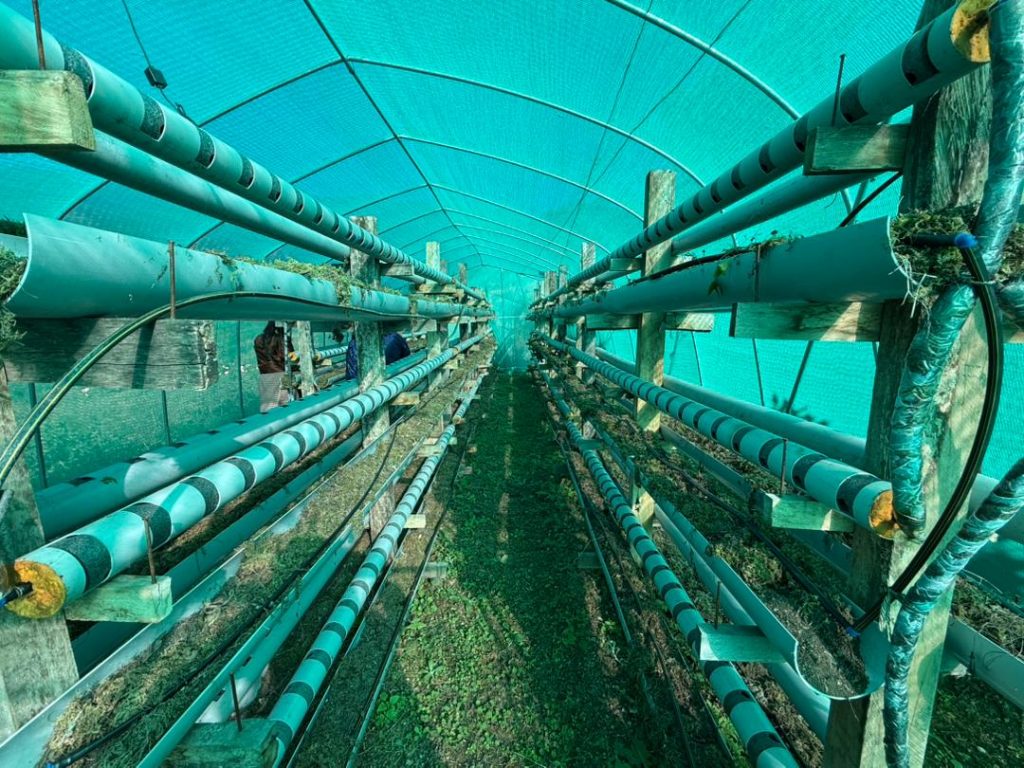
The visit was structured around several flagship CARLEP initiatives. The team began at the Climate-Smart Village in Ngarpontang, Mongar, where they witnessed the transformative power of a holistic, community-led approach. A BRECSA official noted that the CSV model demonstrates how addressing water security, wildlife conflict, and energy needs together creates a synergy that dramatically boosts community resilience and income. Later, a team also visited milk collection shed and dry land irrigation at Ballam.
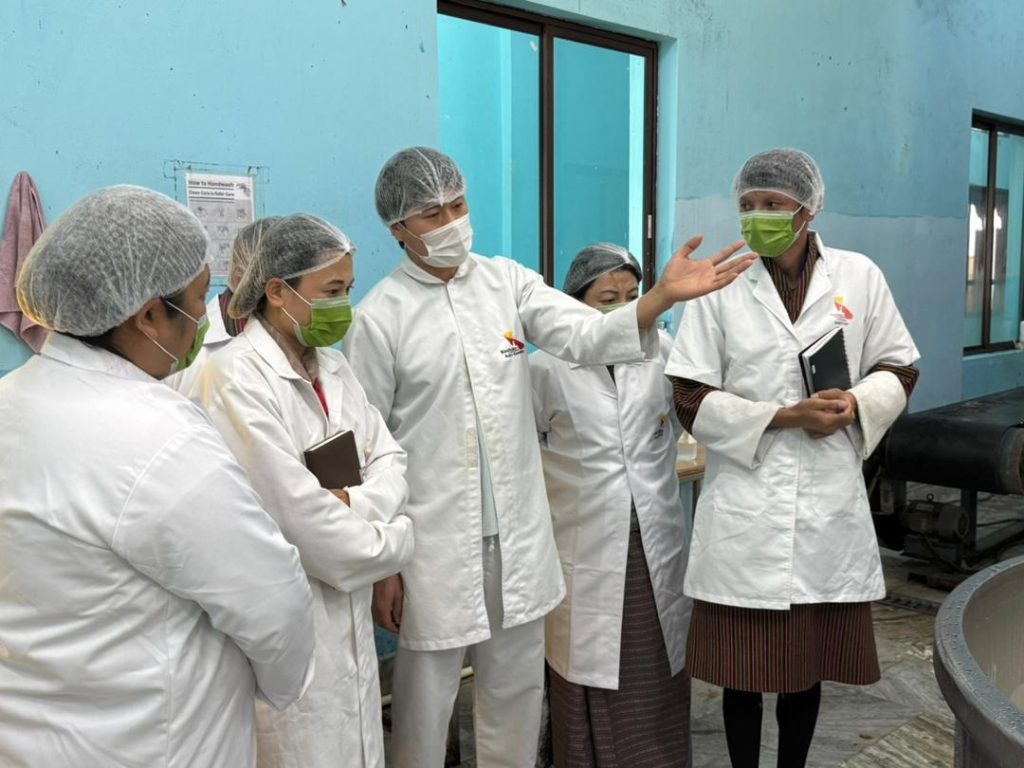
At Koufuku International Limited (KIL) in Trashigang, Bhutan’s premier dairy processor, the team studied a robust market-led value chain. KIL’s engagement with over 1,046 smallholder households through 19 Milk Groups, having injected over Nu. 209 million into farmer incomes, highlighted the indispensable role of a reliable market anchor. The team observed that a strong off-taker like KIL de-risks production for farmers and drives quality standards throughout the entire supply chain.
The visit to the entrepreneur-led Samsara Integrated Agriculture Farm in Mongar showcased the potential of targeted technological support. With CARLEP’s assistance in integrating IoT-based automation for climate control, the mushroom farm doubled its production and income between 2023 and 2024. By also supplying spawn to other farmers, the farm creates a valuable multiplier effect, demonstrating how supporting agile entrepreneurs can catalyze growth for an entire sub-sector.
Finally, the team examined the groundbreaking Hot Callusing Technology for walnut propagation. This IoT-controlled system maintains perfect graft-union conditions, raising success rates from a traditional 30% to over 76%. BRECSA’s team highlighted this as a prime example of how targeted, appropriate technology can solve a decades-old production bottleneck for a high-value national commodity.
Key Lessons for BRECSA Landscapes
The exposure visit yielded concrete lessons directly applicable to BRECSA’s work. It reinforced that building infrastructure is only the first step, and that sustainable management requires institutional frameworks like Water User Associations for irrigation and strict hygiene protocols for dairy sheds. The success of the Climate-Smart Village proved that interconnected, packaged interventions deliver far greater impact than isolated projects. Furthermore, KIL’s role underscored that sustainable value chains fundamentally depend on committed market partners to provide purchase assurance for farmers. The visit also highlighted the importance of empowering progressive farmers and nursery operators as local service providers and entrepreneurial drivers, creating sustainable hubs of knowledge and enterprise.
Moving Forward with Enhanced Insight
The BRECSA team returned with a wealth of actionable insights. The exposure visit has strengthened the project’s resolve to integrate these proven approaches—particularly the holistic CSV model, market-centric planning, and strategic technology adoption—into its own activities. This exchange has also fostered a valuable collaborative bridge with the CARLEP team, promising continued knowledge sharing as BRECSA works to build resilience and commercial viability for smallholder farmers across its target landscapes.
The visit was strategically aligned with IFAD’s Project Completion Report mission for CARLEP, providing the team with additional insights into project closure, documentation standards, and validation processes.